
Strategy, generative AI, agents, automation, and LLM integration, aimed at enterprise AI solutions that hold up in production, past where most demos stop.
250+
Engineers across AI
2000+
Projects Delivered
30%
Cloud-cost reduction
92%
Client Retention
12+
Countries Catered

Completed Projects

We’re an engineering team that treats enterprise AI solutions as infrastructure, not a demo. We’re built from senior engineers, not researchers or generalists, and each has shipped a system that had to keep working after the launch excitement wore off. That’s a different discipline than proving a model can work once; it’s proving it keeps working under real load, real edge cases, and real users who don’t behave the way a test dataset did. That’s the kind of team we are, whether the engagement is one agent or a full production build, and it’s why we at RCV World treat enterprise AI solutions as an engineering problem first, not a research project.






AI strategy & readiness assessment, generative AI development, AI agent development, AI automation, LLM integration into existing stacks
Engineering and product leaders who’ve already evaluated vendors and want an AI system that runs in production, not a pitch
Project-based build, embedded team, or a strategy engagement that hands off a validated roadmap; see the comparison below
Scoping call within a few business days; build kickoff timeline set after scope is signed off
Varies by scope; a strategy engagement and a production agent build have very different footprints; use the cost calculator.
Our engineering expertise spans the platforms, frameworks, and protocols enterprises are actually standardizing on right now.
We build with the same models and protocols now standard in production agentic AI, not last year’s chatbot stack. Multi-agent orchestration and governance are part of the build, not an afterthought.
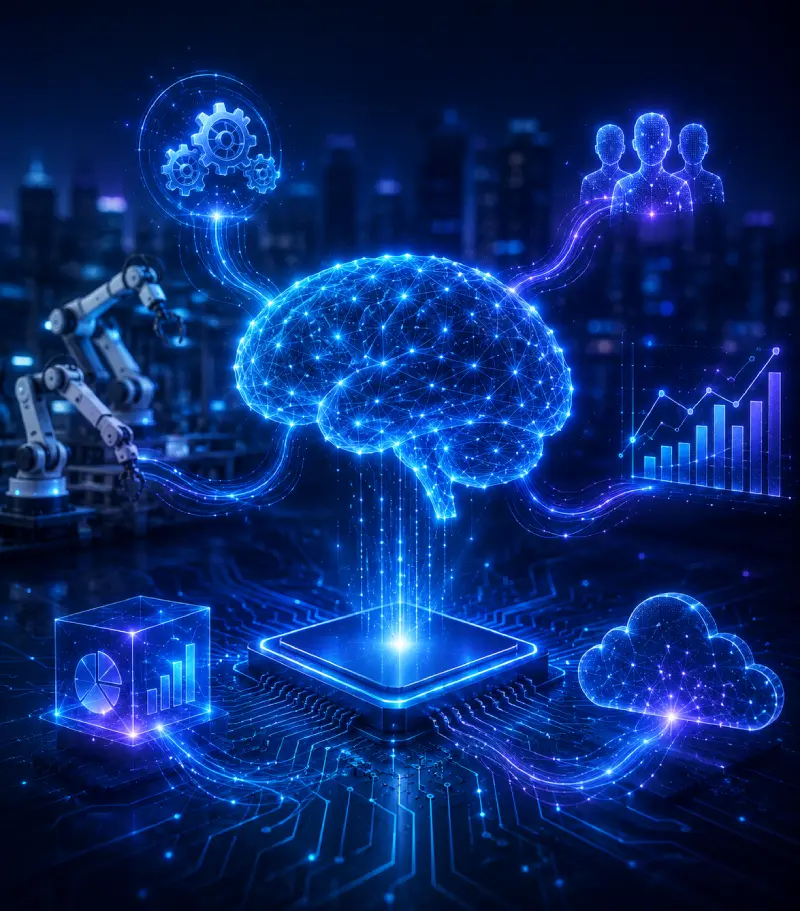
AI writes a growing share of the code today. Our engineers still own the architecture it lands in, the part that decides whether a system holds up in year three, not just at launch.
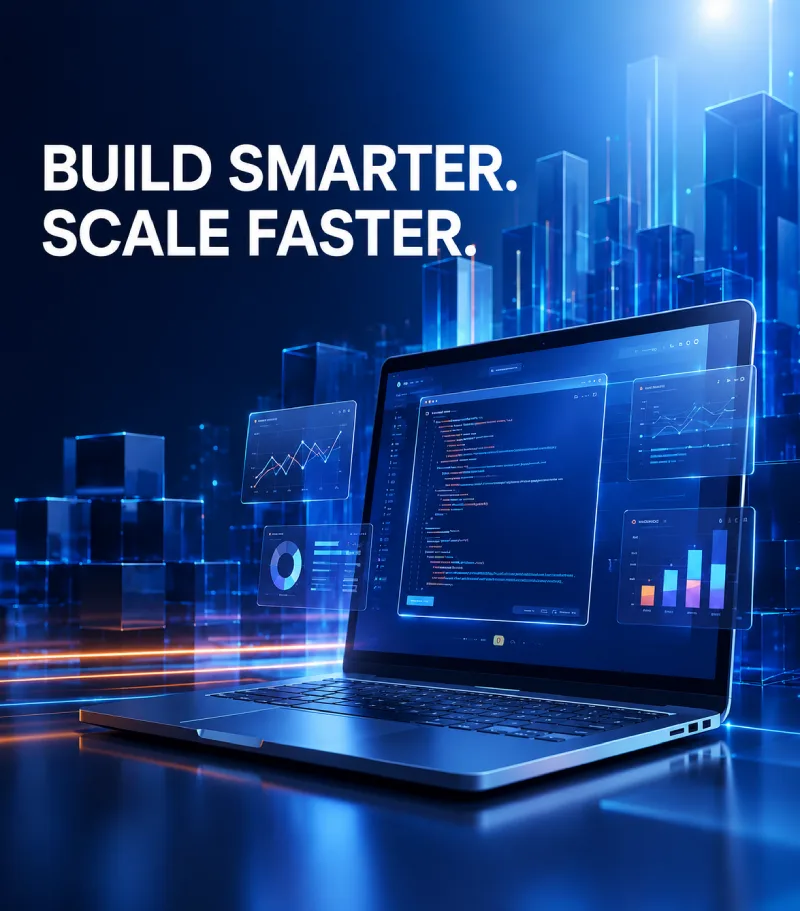
Platform engineering and FinOps discipline keep releases moving fast and the cloud bill explainable, tied to what’s actually driving cost, not a surprise at month’s end.

Manual data cleanup is disappearing into automation. What’s left, lineage, governance, and integration your team can actually audit, is where we put senior engineers.

Predictive monitoring catches most incidents before an alert fires. When one does reach a person, it’s already been triaged, not sitting in a queue.

A demo proves a model works once, in a controlled setting. What RCV World delivers is what most vendors skip. Data pipelines that don’t leak or drift, guardrails that hold under adversarial input, an evaluation harness built before launch, and monitoring that catches drift before a customer does. Every engagement ships with full documentation, so your team can run it without RCV World’s engineers in the room.

Each door below answers a different question a technical buyer arrives with. Pick the one that matches where you are – the underlying engineering team and delivery discipline are the same across all five.
An AI readiness assessment and a roadmap your board will actually approve, covering data maturity, use-case prioritization, and build-vs-buy calls
Custom LLM applications built on your data, not a wrapper around someone else's chat window.
Agents that execute multi-step tasks against real systems, with the guardrails and human checkpoints that keep autonomy safe.
Applying AI to an operational process you already run, aimed at cycle time and error rate, not a new product.
Wiring a large language model into an existing application or data platform without a rebuild.
Every engagement runs on the RCV Delivery Model™ underneath. Which shape it takes for your AI Solutions build depends on the problem, not a package we default to.
| Model | Best Fit When | What You Get | Buyer Proof Artifact |
|---|---|---|---|
|
RCV Outcome Delivery Pods |
A new AI feature or product needs to prove measurable value, not just ship |
KPI framing, a product pod, delivery analytics, value reviews, release telemetry |
Product KPI scorecard and release-health dashboard |
|
RCV Platform Accelerator |
An AI capability needs to be reusable across teams, not built once and abandoned |
Platform diagnostic, foundation sprint, golden paths, onboarding, adoption telemetry |
Platform catalog, adoption metrics, golden-path demo |
|
RCV Governance Assurance Model |
An AI program runs in a complex, regulated, or multi-vendor environment |
Governance handbook, cadence map, RAID log, quality gates, architecture controls, transition pack |
Real dashboard pack, escalation matrix, sample exit/transfer pack |
Problems at this scale usually aren’t about missing knowledge. They’re about coordination, ownership, and change control. The failure modes are consistent across our engagements.
| A good fit if… | Probably not a fit if… |
|---|---|
|
You’ve already run a proof of concept and need it hardened for production
|
You want a demo for an internal pitch, not a system |
|
You have a defined data source and need
engineering built around it |
Your data isn’t ready for that yet, start with the |
|
You need engineers who own the model, the
pipeline, and the guardrails together |
You just need extra headcount on a team already |
Need AI engineers on your own team instead of a scoped project? We offer AI Solutions and deploy senior AI engineers directly into your team, working your backlog under your engineering lead, enterprise AI capability without handing over the whole build.
Need AI engineers on your own team instead of a scoped project? We offer AI Solutions and deploy senior AI engineers directly into your team, working your backlog under your engineering lead, enterprise AI capability without handing over the whole build.
Every engagement runs on the same disciplined framework, whether we deliver a single agent or a full AI transformation program.

We audit data readiness, existing infrastructure, and your use case before committing to an architecture, the step most AI vendors skip on the way to a demo.

Model selection, guardrail design, and team composition get signed off with your stakeholders before we write a line of production code.

Agile, product-centric delivery with the data pipelines, evaluation harness, and monitoring your production AI system needs, past what a notebook can carry.

Governance isn’t a status meeting. It’s executive steering, a live risk register, quality gates, and value tracking on every engagement.
Knowledge transfer, operational hypercare, and a plan for scaling the system past its first version, once it’s proven in production.

We’ve built AI systems inside regulated, high-stakes environments, not just greenfield pilots.
Straight answers to what enterprise and fast-scaling buyers ask most.
An AI development company builds systems around your data and infrastructure, custom pipelines, model evaluation, and guardrails suited to your use case. A wrapper agency typically connects a public LLM API to a simple interface and calls it a product. We build the engineering layer around the model, data ingestion, evaluation, monitoring, and fallback behavior, so the system keeps working once real users and real data hit it, not just during a sales demo.
Cost depends heavily on scope: a strategy and readiness assessment is a small, fixed engagement, while a production agent system with custom data pipelines is a much larger build. Pricing scales with complexity, data volume, and governance needs, not a flat rate card. The fastest way to get a real number is a scoping call, or use the cost calculator for a directional estimate first.
A typical AI strategy and discovery phase takes 2 to 6 weeks, a focused automation or proof-of-concept build takes 8 to 16 weeks, and a production-grade system with custom integrations usually takes 4 to 9 months. We favor shipping a narrow, working version early over one big-bang launch, since that approach surfaces integration challenges sooner.
We work across OpenAI, Anthropic, Google, Meta, and open-source models like Llama and Mistral, and we pick the model based on your use case, latency, and data residency needs, not a default vendor relationship. Model selection gets documented during Design & Capability Match, so you know exactly which model is running where before we build. Because we build the orchestration layer around the model rather than hard-coding a single vendor's API throughout, swapping models later is a configuration change, not a rebuild.
No. We don't send your data to a third party to train a shared or public model. Any fine-tuning happens on infrastructure and data boundaries we document explicitly with you during the Design & Capability Match, so you know which model providers are involved and where your data lives before we start building. Your data stays yours, inside the system we build for you.
You do. We build against your infrastructure and your data; source code, trained or fine-tuned model artifacts, and documentation transfer to you at the end of the engagement, not just a working demo you can't maintain. Data boundaries and vendor dependencies get documented explicitly during Design & Capability Match, so you know exactly what you're running and where it lives before we start building.
Every engagement includes an evaluation harness built before launch, so performance is measured against defined criteria rather than judged by feel after the fact. In production, confidence thresholds and fallback behavior route low-confidence output to a human or a safe default instead of reaching a user as fact. If a use case carries too high an error rate for its risk level, we'll say so during the Diagnose stage rather than build it anyway.
The evaluation harness catches this early, and the Govern & Optimize stage is built to catch it in production too, through monitoring, a live risk register, and documented fallback behavior, rather than leaving a failure mode for users to discover first. If a use case genuinely isn't a fit for AI, we'll say so during Diagnose rather than build it anyway.
Tell us about your business, and we’ll create a custom plan to grow your traffic, leads, and predictable revenue.
A 30-minute scoping call with an engineer.
A short written summary of scope, risks, and a ballpark on cost and timeline.
A proposed team and plan – only if it’s a fit.
RCV World helps businesses turn technology into measurable growth. We deliver AI, digital engineering, cloud, data, enterprise, managed, and talent solutions built around your goals. Our teams combine technical expertise, strategic thinking, and execution to create secure, scalable, and future-ready solutions for businesses across industries.
